Transform Your Organization: Just How AI Automation Is Transforming B2B Operations
AI automation is reshaping B2B procedures in considerable ways. Business are embracing this modern technology to streamline operations and boost effectiveness. As jobs come to be automated, companies can concentrate on strategic development rather than ordinary procedures. The implications of these changes are profound, influencing every little thing from customer interactions to supply chain monitoring. Understanding this change is crucial, as the future of service rest on the reliable integration of AI into daily procedures. What lies ahead in this developing landscape?
Comprehending AI Automation in B2B Context
As services significantly look for efficiency, comprehending AI automation within the B2B context ends up being crucial. AI automation describes the application of artificial intelligence innovations to improve and enhance organization processes. In B2B atmospheres, this can manifest in different types, such as automating data entrance, optimizing supply chain logistics, or enhancing supply administration. Organizations leveraging AI automation can reduce operational expenses, lessen human error, and increase performance. AI devices can evaluate large quantities of data to provide actionable insights, making it possible for informed decision-making. The assimilation of AI into B2B procedures not just transforms typical workflows yet also promotes dexterity and scalability, allowing organizations to adapt to market adjustments quickly and successfully. Welcoming this technology is crucial for remaining competitive in today's digital landscape
Enhancing Consumer Experience Via AI
How can AI change consumer interactions in the B2B market? AI improves consumer experience by providing customized, timely, and effective solution. Smart chatbots and digital aides can manage questions 24/7, making certain clients get instant actions. Growth Systems For B2B. Anticipating analytics make it possible for companies to expect client demands, tailoring offerings appropriately. AI-driven platforms can examine consumer information, permitting targeted marketing strategies and boosted involvement. In addition, view evaluation devices examine consumer comments, assisting organizations adjust their services. By automating routine tasks, AI maximizes human sources to concentrate on high-value communications, promoting stronger relationships. The assimilation of AI not just enhances communication but additionally constructs trust fund and commitment, eventually elevating the overall consumer experience in the affordable B2B landscape
Streamlining Supply Chain Management With AI
AI plays a necessary duty in enhancing supply chain management through anticipating analytics and automated supply control. By leveraging anticipating analytics, services can expect demand fluctuations and readjust their procedures appropriately. Automated inventory systems better improve efficiency by guaranteeing stock degrees are maintained, reducing waste and boosting general productivity.
Anticipating Analytics Benefits
While several services face obstacles in handling complex supply chains, predictive analytics supplies a transformative option by leveraging vast quantities of data to anticipate trends and enhance operations. By examining historic information alongside real-time inputs, anticipating analytics enables firms to determine patterns and expect future needs. This insight enables even more educated decision-making, enhancing performance and decreasing prices. On top of that, businesses can proactively address possible disruptions by forecasting supply chain bottlenecks and adjusting approaches accordingly. The assimilation of predictive analytics not just improves stock administration however likewise cultivates more powerful relationships with vendors and customers with timely reactions to market shifts. Eventually, the fostering of predictive analytics equips companies to stay affordable in an increasingly dynamic organization environment.
Automated Stock Control
As organizations progressively depend on anticipating analytics to enhance supply chain operations, automated supply control arises as an effective ally in this initiative. By leveraging AI-driven technologies, firms can boost precision in supply tracking, decrease stockouts, and reduce excess stock. Automated systems examine real-time information, permitting companies to anticipate demand changes and readjust stock levels appropriately. This not just simplifies order fulfillment but also improves cash flow management by decreasing holding expenses. Furthermore, AI can determine patterns in acquiring behavior, enabling more informed decision-making concerning supplier partnerships and purchase methods. Eventually, automated stock control not only boosts functional effectiveness yet additionally improves client satisfaction by ensuring item accessibility, strengthening its function as a crucial part in modern supply chain monitoring.
Data-Driven Decision Making Powered by AI
In today's competitive landscape, companies increasingly rely upon data-driven decision-making to boost functional effectiveness and calculated planning. Expert system plays a critical role in this change by analyzing huge amounts of data swiftly and properly. AI algorithms identify patterns, fads, and abnormalities that human experts could ignore, making it possible for businesses to make enlightened decisions based upon real-time insights. This capability permits companies to forecast market shifts, maximize resource allowance, and tailor their offerings to customer requirements. Additionally, AI-driven analytics promote risk evaluation and monitoring, making certain that organizations can browse uncertainties successfully. By leveraging these advanced tools, organizations not only enhance their decision-making procedures yet additionally obtain a competitive benefit in their respective markets, fostering growth and technology.
Automating Repetitive Tasks to Boost Efficiency

Integrating AI With Existing Company Procedures
Many organizations face difficulties when incorporating AI with existing organization procedures. These difficulties usually originate from an absence of understanding concerning just how AI can complement current process. Effective integration requires an extensive assessment of existing operations to identify areas where AI can include worth. Organizations has to also ensure that their teams are geared up with the required skills to take advantage of AI tools successfully. In enhancement, smooth combination copyrights on the compatibility of AI technologies with legacy systems. Business usually locate it beneficial to adopt a phased method, piloting AI applications in particular departments before a more comprehensive rollout. This approach permits changes based upon preliminary feedback, guaranteeing smoother changes and taking full advantage of the prospective benefits of AI automation in boosting efficiency and efficiency.
Future Trends in AI Automation for B2B Firms
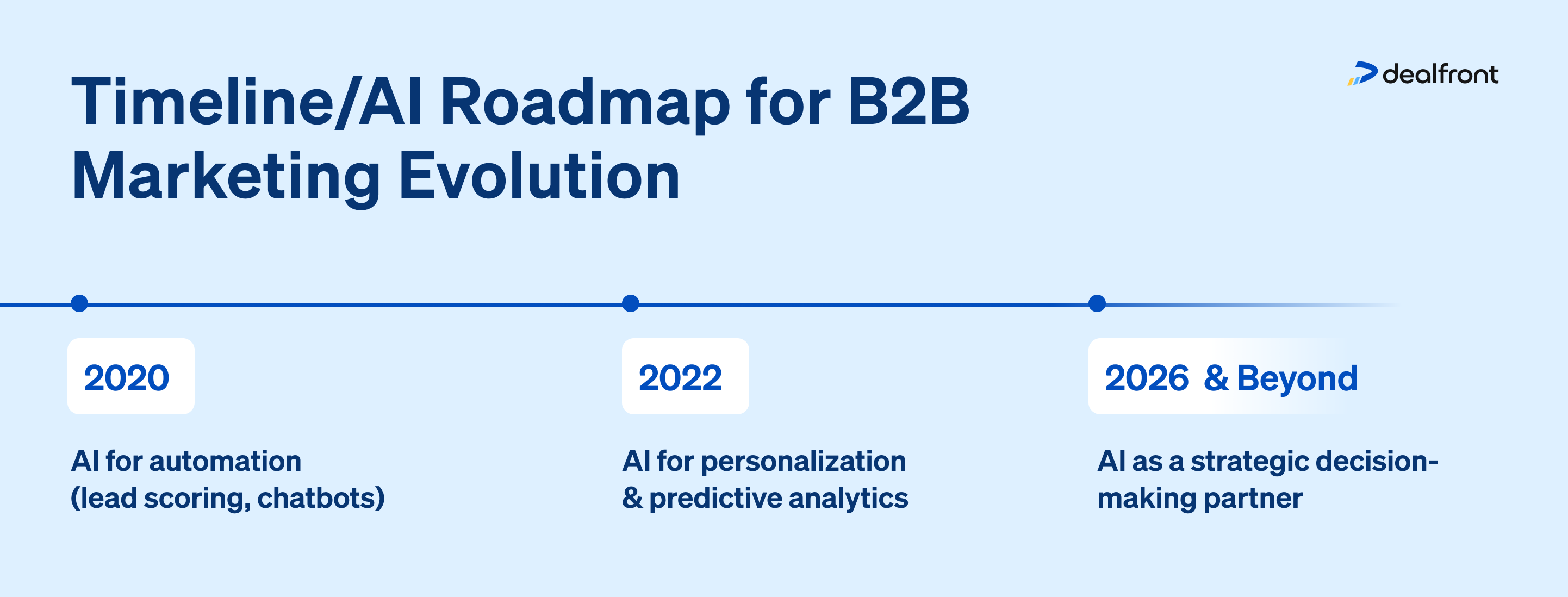
As B2B business want to the future, improved data analytics is established to play a critical role in driving decision-making procedures. Intelligent process automation will certainly likewise become a vital fad, enhancing operations and boosting effectiveness. These improvements assure to reshape just how businesses operate, ultimately bring about even more active and responsive organizations.
Improved Data Analytics
While organizations increasingly depend on data-driven decisions, the function of AI in enhancing data analytics is becoming extra important in B2B procedures. AI modern technologies promote the collection and analysis of substantial datasets, allowing companies to reveal valuable insights that drive calculated planning. Anticipating analytics powered by AI enables companies to anticipate market fads and consumer behavior with higher precision. Additionally, maker discovering formulas boost data analysis, determining patterns that human experts might neglect. This brings about even more enlightened decision-making and optimized resource allocation - Minarik AI. As B2B firms continue to welcome AI-driven analytics, they can anticipate enhanced functional efficiency, boosted customer experiences, and an one-upmanship out there. The future of information analytics in B2B rests on incorporating advanced AI capacities
Smart Refine Automation
Smart Refine Automation (IPA) is poised to change B2B operations by perfectly incorporating AI innovations with typical organization procedures. This ingenious method integrates robot process automation (RPA) with advanced AI capacities, allowing organizations to enhance effectiveness and precision. Firms can automate repetitive tasks, such as data entry and invoice processing, permitting employees to focus on tactical initiatives. IPA additionally leverages artificial intelligence and all-natural language handling, enhancing decision-making via real-time information analysis. As organizations increasingly take on IPA, they can anticipate considerable price reductions and boosted client experiences. Future fads suggest an expanding dependence on IPA for scalability and adaptability, placing companies to grow in an ever-evolving marketplace. Welcoming IPA will certainly be crucial for maintaining competitiveness in the electronic age.
Often Asked Inquiries
What Industries Benefit Most From AI Automation in B2B Operations?
Production, logistics, money, and healthcare sectors profit most from AI automation in B2B operations. These industries utilize automation to improve effectiveness, minimize expenses, simplify procedures, and improve decision-making with predictive analytics and data-driven understandings.
Just How Can Little Companies Execute AI Automation Effectively?
Local business can implement AI automation effectively by identifying repeated jobs, picking appropriate tools, incorporating options progressively, educating personnel, and continuously examining performance to optimize processes, maximizing and making sure a smooth changeover efficiency. AI Automation For B2B.
What Are the Expenses Related To AI Automation Implementation?
The costs connected with AI automation application typically consist of software application acquisition, framework upgrades, educating personnel, recurring maintenance, and prospective appointment fees. These expenses can differ substantially based on the scale and complexity of the automation options chosen.
How Do I Gauge ROI From AI Automation Initiatives?
To gauge ROI from AI automation campaigns, one should evaluate expense financial savings, productivity renovations, and profits development versus execution prices. Tracking vital performance indicators gradually gives useful understandings into performance and overall roi.
What Skills Are Required to Handle AI Automation Projects?
Efficient monitoring of AI automation tasks needs abilities in task monitoring, data analysis, shows, and understanding AI modern technologies. Furthermore, solid interaction, analytic capabilities, and adaptability are essential for maneuvering the complexities of such efforts.
As services Minarik AI significantly look for performance, recognizing AI automation within the B2B context ends up being important. The assimilation of AI right into B2B operations not just changes typical operations yet additionally cultivates agility and scalability, allowing services to adapt to market modifications quickly and efficiently. While companies increasingly rely on data-driven choices, the function of AI in boosting information analytics is ending up being much more vital in B2B operations. Intelligent Refine Automation (IPA) is positioned to change B2B procedures by perfectly integrating AI modern technologies with standard organization processes. Reliable administration of AI automation projects needs skills in task administration, data analysis, programming, and understanding AI technologies.